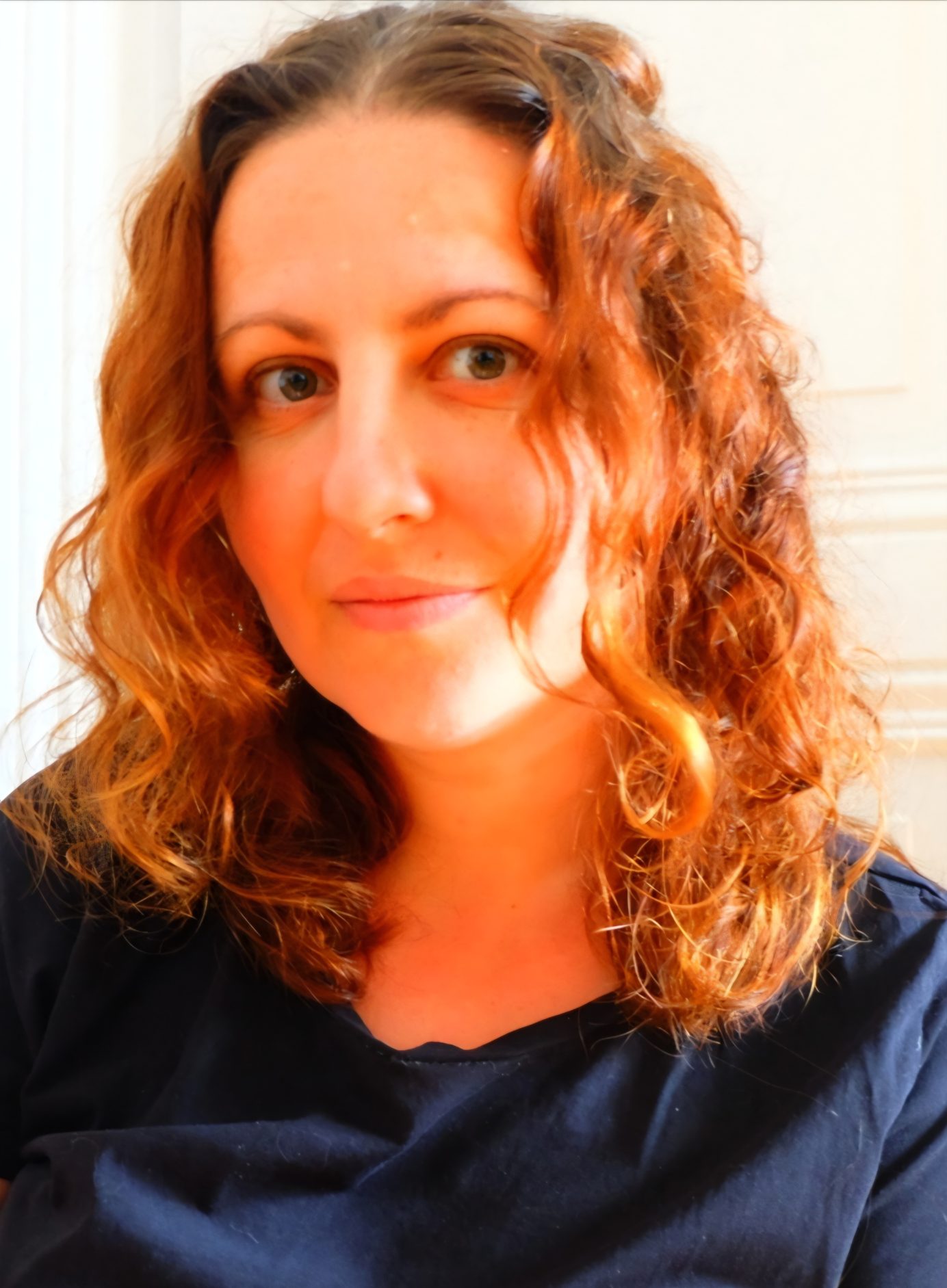
Maile Chapman

Affiliation: University of Nevada

Research Areas:
Period: 20th Century Gothic, 21st Century Gothic
Genres and Media: Fiction, Film and TV
Regions and Cultures: American Gothic
Creatures: Aliens, Animals, Ghosts

Associate Professor of Creative Writing & English, University of Nevada, Las Vegas. Author of novels The Spoil (Graywolf, 2026) and Your Presence is Requested at Suvanto.

Email: maile.chapman@unlv.edu
Website: https://www.unlv.edu/people/maile-chapman

Christian Wilken

Affiliation: Heinrich-Heine-University Düsseldorf

Research Areas:
Period: Early Modern Gothic, 18th Century Gothic, 19th Century Gothic, 20th Century Gothic
Gender: Female Gothic, Gothic Masculinity
Interdisciplinary Approaches: Eco-Gothic, Folklore and Myth, Technology, Medicine and Science, Gothic Music, Spirituality and Religion
Genres and Media: Animation, Arts, Fiction, Film and TV, Games, Comics and Graphic Novels, Poetry, Theatre and Performance, Tourism and Travel
Regions and Cultures: American Gothic, Asian Gothic, Canadian Gothic, European Gothic, Irish Gothic, Middle-Eastern Gothic, Nordic Gothic, Scottish Gothic, Welsh Gothic
Creatures: Aliens, Ghosts, Monsters, Vampires

Literary scholar exploring hauntology, speculative fiction, and ecocriticism, with a focus on weird fiction, animation, and posthumanism.

Email: christian.wilken@hhu.de

Jane Gill

Affiliation: University of Hertfordshire

Research Areas:
Period: 18th Century Gothic, 19th Century Gothic, 20th Century Gothic, 21st Century Gothic
Gender: Female Gothic, Gothic Masculinity, Queer Gothic
Interdisciplinary Approaches: Eco-Gothic, Folklore and Myth
Genres and Media: Arts, Fiction, Film and TV, Games, Poetry, Theatre and Performance, Virtual Gothic
Regions and Cultures: Postcolonial Gothic, Antipodean Gothic, European Gothic, Irish Gothic
Creatures: Aliens, Animals, Ghosts, Monsters, Vampires, Zombies

Jane Gill is a PhD student at the University of Hertfordshire, focusing on the monstrous feminine through an Eco-Gothic lens, particularly the female vampire.

Email: jane.gill@hotmail.com

Steven K Brehe

Affiliation: University of North Georgia

Research Areas:
Period: 19th Century Gothic
Interdisciplinary Approaches: Folklore and Myth
Regions and Cultures: European Gothic
Creatures: Vampires

Steven K Brehe teaches literature, writing, and linguistics in a medium-sized regional university in rural Georgia.

Email: sbrehe@ung.edu

Amanda Hughes

Affiliation: University of North Texas

Research Areas:
Period: Early Modern Gothic, 18th Century Gothic, 19th Century Gothic, 20th Century Gothic, 21st Century Gothic
Genres and Media: Fiction, Film and TV, Comics and Graphic Novels, Theatre and Performance
Regions and Cultures: American Gothic, Canadian Gothic, European Gothic, Irish Gothic, Scottish Gothic, Southern American Gothic, Welsh Gothic

PhD candidate in English Literature, specializing in early modern British literature. Dissertation topic: the Gothic in 21st century performance of early modern drama.

Email: profamandahughes@gmail.com

Raised by Shadows: My First Encounter with the Gothic

My First Encounter with the Gothic, by Éile Rasmussen

I didn’t stumble upon the Gothic. I was raised by it.

I lived with the uncanny long before I read Dracula or wandered the echoing halls of theory. Cosied up on the couch as a child of the late 80s and early 90s, I was mesmerised by the soft horrors of The Addams Family, The Munsters and I Dream of Jeannie. Some might call them monster-coms or paranormal sitcoms, but to me, they were family albums.

It wasn’t the fright that drew me in. It was the familiarity.

The Gothic has always felt like home, even in its laugh-track form: a space where strangeness was ordinary, where death wasn’t feared but invited to dinner, where affect ran thick and weirdness was not a flaw but a form of love. The Addamses weren’t monstrous to me – they were kind, devoted, delightfully odd. In a world that often punished difference, they celebrated it with joy. And in that celebration, I felt recognised.

No one told me this was the Gothic. I had to grow into the word, but the sensibility was always already in me: the hauntings, the yearning, the sense that beauty could be twisted and the twisted, beautiful. As I aged, the shadows deepened. I began to trace the aesthetic’s darker roots – abandonment, loss, power. I started to notice what lay beneath the surface of the laughter: the way these shows carved out space for otherness, for melancholy, for critique.

Looking back, those early monster-coms were my first lessons in Radical Gothic Relationality – long before I gave my theory a name. They modelled relationality in resistance, where love took strange forms and community wasn’t built through sameness but through acceptance of the spectral, the grotesque, the uncontainable.

For me, the Gothic has never been about fear alone. It has always been about recognition – of the parts of ourselves that don’t quite fit the frame, of the ghosts that trail behind us, of the systems that haunt our lives in ways we are taught not to name. The Gothic taught me not just how to see the world, but how to feel it differently.

I still carry those first hauntings with me as a cultural philosopher and theorist. They echo in every footnote, flicker through every lecture, and linger in the questions I ask about power, affect and recognition. That old black-and-white screen glowed with more than nostalgia – it gave me my first glimpse into the uncanny kinship of a world that felt, finally, like it had room for me.

The Gothic didn’t frighten me. It found me.

And I’ve never left.

My First Encounter with the Gothic

My First Encounter with the Gothic, by Kristin Boaz

Before reaching my 5th birthday, I had my first encounter with the Gothic and with trauma. My older brother used to lock me in the closet when he had to babysit me. He blasted Disney’s ‘Chilling, Thrilling Sounds of the Haunted House’ album while I kicked and screamed in the closet. This sounds horrible and makes my brother sound like a less than par babysitter! I often think about that album and the feeling of being held captive to the spooky sounds, and creepy screams and remember how exciting it was. I loved and hated every minute of it! Little did I know back then that these semi- traumatic events would shape my life as a forever Goth!
As a young adult, I had the opportunity of becoming a theme park monster and trainer of all the ghouls at Knott’s Scary Farm in Buena Park California. I became a lover of the macabre and spent many weekends at spooky events, performing or just enjoying the creepy creeps like me. I loved the spooky ghoulies in the movies, read spooky books, and anything that gave me the feeling I had as a kid, that scary magical feeling, the feeling of your heart in your throat and goosebumps on your arms.
After the novelty of the theme parks wore off, I went to college and became an English literature and theater teacher. After years of teaching the classics in high school, I found myself frustrated that the students didn’t get joy from reading the literature we were asked to teach at the time, and subsequently they always seemed to turn in subpar work. There was no passion in their work and in their discussions.
I realized that something had to change in the curriculum. There needed to be a choice for high school students in English. I remembered what excited me in literature as a young scholar, and that was the macabre. So, I began the process of writing a high school Gothic literature course that focused on Mary Shelly, Poe, Irving, and Shirley Jackson. The students loved the course materials and produced amazing essays and classroom conversations. I then wrote a modern Gothic literature course, and focused on Steven King, Anne Rice, and Stephanie Myers. High schoolers were obsessed with the sparkly vampire that Myers created! Because of Myers, and her sparkly, moody vampires, I was able to go into vampire lore and werewolves! College Board accepted my course submission, and I happily taught Gothic literature and modern Gothic literature for years.
At the beginning of each semester, I always liked to survey the students. The question I asked was, “Did scary things traumatize you as a child?” and the answer was always yes! More importantly, with Gothic literature as an option, I was able to get high schoolers to READ and really enjoy discussions and assignments!!! Our trauma of spooky things brought us all together! We bonded over the spooky ending of Poe’s ‘The Black Cat’, and ‘Berenice!’ The students thought deeply about whether Frankenstein had the right to create life! We had endless discussions on Shirley Jackson’s Hill House, and mental illness.
The Gothic, in all its splendor, has shaped my life. I am proud to say that I take great joy in dark fiction.  And I thank my brother for tormenting me as a child!

Badr Selfaoui

Affiliation: Université Paris-Cité

Research Areas:
Period: 19th Century Gothic, 20th Century Gothic
Gender: Gothic Masculinity, Queer Gothic
Interdisciplinary Approaches: Folklore and Myth, Technology, Medicine and Science, Gothic Music, Gothic Fashion, Spirituality and Religion
Genres and Media: Arts, Fiction, Film and TV
Regions and Cultures: Postcolonial Gothic, American Gothic, European Gothic, Irish Gothic, Scottish Gothic
Creatures: Animals, Ghosts, Monsters, Vampires

PhD student at Université Paris-Cité (ECHELLES research lab) researching echoes of 19th century and late Gothic literature in contemporary musical and aesthetic countercultures.

Email: selfaoui.badr@gmail.com

Ken Wagner

Research Areas:
Period: Early Modern Gothic, 18th Century Gothic, 19th Century Gothic
Interdisciplinary Approaches: Folklore and Myth, Technology, Medicine and Science, Spirituality and Religion
Genres and Media: Arts, Fiction, Poetry
Regions and Cultures: American Gothic, European Gothic, Irish Gothic, Scottish Gothic, Welsh Gothic
Creatures: Ghosts

gone fission

Email: kmkwagner@protonmail.com
Website: https://kmkwagner.dev

Irene Lens-Fernández

Affiliation: University of Santiago de Compostela

Research Areas:
Period: 19th Century Gothic, 20th Century Gothic
Interdisciplinary Approaches: Eco-Gothic, Folklore and Myth, Gothic Music
Genres and Media: Arts, Fiction, Film and TV
Regions and Cultures: European Gothic
Creatures: Animals, Monsters, Vampires

Predoctoral fellow at the University of Santiago de Compostela. PhD candidate in Anglo-American Literature and Culture, researching weird fiction and film, ecocriticism and liminality.

Email: irene.lens@rai.usc.es
Website: https://linktr.ee/irene_lens