Gothic Selves/Artificial Others – Call for Papers

University of Hull, UK (28-31 July, 2026)

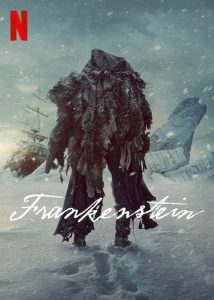
Once speculative, artificial intelligence now haunts contemporary society, with public discourse around its application and scope ranging from the utopian to the apocalyptic. The Gothic’s fascination with doubles, simulacra, uncanny agency, and other forms of otherness offers rich tools for examining the anxieties and crucial ethical dilemmas provoked by AI. The Gothic has long been preoccupied with the unstable boundaries between the natural and the artificial, as well as between individual subjectivity and the sublime terror of being subsumed into larger networks of terrible knowledge.  From Shelley’s Frankenstein and Hoffmann’s Olympia in ‘The Sandman’, through Freud’s notion of the uncanny and the development of posthumanist thinking, the concept of artificial beings has raised profound anxieties about what it means to be human. Today, these concerns have become newly urgent in the age of generative AI, where the promise of creativity and connection is shadowed by questions of exploitation, environmental cost, and the erosion of individuality.

Hull Gothic

‘Gothic Selves/Artificial Others’ invites scholars and practitioners to explore the intersections of Gothic literature, culture, and theory with artificial intelligences,  automated creativity, and posthuman forms of subjectivity. This conference seeks work that is intellectually rigorous and experimentally open, engaging with both classic Gothic texts and contemporary manifestations of the Gothic imagination across media. We invite participants from in and outside the arts and humanities to respond to the theme and intend the conference to have a truly interdisciplinary ethos.

We invite the submission of abstracts that explore the theme of ‘Gothic Selves/Artificial Others’. We welcome proposed panels of three related papers. Proposals might consider AI as a lens for Gothic subjectivity, the Gothic in AI-generated texts, or the ethical and aesthetic implications of artificial others in Gothic texts and contexts.

Topics may include, but are not limited to, the following:

  • Doubles, doppelgängers, and AI analogues
  • Artificial creativity and the Gothic imagination
  • Gothic ethics and AI decision-making
  • AI, disability, and the Gothic
  • Gothic ecologies and AI
  • Human/machine boundaries and Gothic subjectivity
  • Gothic hauntings in digital media
  • Automata, robots, and other uncanny others
  • Generative AI and Gothic aesthetics
  • Posthuman and cyborg Gothic
  • Gothic constructions of consciousness
  • Ethics, horror, and the uncanny in AI
  • The Gothic sublime and artificial intelligence
  • Surveillance, Paranoia, and the Gothic
  • Queering AI and Gothic identity
  • Deconstructing human/AI binaries in Gothic narratives
  • Digital narratives and the Gothic
  • Cognitive studies, neuroscience, and the Gothic
  • Gothic destabilization of somatopsychic boundaries
  • Technology, Labour, and the Gothic
  • Gothicizing digital humanities
  • Gothic, Affectivity, and Embodiment

Please submit a 250-word abstract by 13 February 2026 to IGAHull2026@hull.ac.uk, including your name, a short biography, affiliation (if any), and contact details. Please send your submission as an attachment (as opposed to a link to a server such as Google Docs). Submissions for panels should be sent as a single submission with three 250-word abstracts, a brief statement of the theme of the panel and the information above about each of the presenters.

https://hullgothic.wordpress.com

My First Encounter With Gothic

My First Encounter With Gothic, by Mary Phelan

I can’t remember the very first time I encountered Gothic literature. For me, it was more a case of growing awareness, of tales about youths suffering the tyranny of the adults in whose institutional care they happened to be. And the medium that brought those tales home initially was television. As a child of the brightly lit twentieth century, I wondered where they all hailed from, these young people trapped in gloomy old houses and lost in rain-soaked landscapes, searching for a route to self-actualisation? I was in adolescence before I engaged with the literature that made these television epics possible.

I was fourteen when I found a copy of Jane Eyre in the school library on a Friday afternoon. I took it home and spent the entire evening reading the book. The next day, I resumed reading and stayed in my room until I finished, and then I sat for ages, wondering. Only a strict directive from my parents to join the family for Saturday evening tea brought me downstairs. But descend the staircase I did, declaring triumphantly, “It’s fine, I’ve read Jane Eyre.” A year or so later, I read Wuthering Heights by another Brontë sister. From then onward, I couldn’t find sagas enough of brooding heroes in old houses, and heroines trying to unravel family secrets.

Over the following years, I read voraciously, the remaining Brontë books, Sir Walter Scott, Dickens and Hardy. I didn’t bypass Jane Austen, and I laughed uproariously at her burlesque of the Gothic voiced in Northanger Abbey. And yes, I confess to bearing strands of protagonist Catherine Morland. I moved on to twentieth-century literature, Daphne Du Maurier, Shirley Jackson, Stephen King and Dean Koontz. But the voices of the older heroes and heroines still spoke to me: it was as if they wanted me to create something.

Following completion of my Masters in English literature, I embarked on another voyage. Beginning with Horace Walpole’s The Castle of Otranto, I traced the progress of Gothic tropes through the eighteenth century to the present day. This voyage led to the writing and publication of my book, Wicked Uncles and Haunted Cellars: What the Gothic Heroine Tells Us Today (Greenwich Exchange).

In it, I discuss the endurance of the Gothic, and its continuing relevance in this technological environment. I explore how bright lights and smartphones will never vanquish the ghosts that preside within, and sometimes outside, ourselves. I refer to the nascent adolescent within all of us, and how we struggle constantly to cast off the bindings of banality and mediocrity that are even more of a threat to the personality than the monsters that lurk in the basement. Of course, I now write my own Gothic tales, but that is a story for another time.

Raised by Shadows: My First Encounter with the Gothic

My First Encounter with the Gothic, by Éile Rasmussen

I didn’t stumble upon the Gothic. I was raised by it.

I lived with the uncanny long before I read Dracula or wandered the echoing halls of theory. Cosied up on the couch as a child of the late 80s and early 90s, I was mesmerised by the soft horrors of The Addams Family, The Munsters and I Dream of Jeannie. Some might call them monster-coms or paranormal sitcoms, but to me, they were family albums.

It wasn’t the fright that drew me in. It was the familiarity.

The Gothic has always felt like home, even in its laugh-track form: a space where strangeness was ordinary, where death wasn’t feared but invited to dinner, where affect ran thick and weirdness was not a flaw but a form of love. The Addamses weren’t monstrous to me – they were kind, devoted, delightfully odd. In a world that often punished difference, they celebrated it with joy. And in that celebration, I felt recognised.

No one told me this was the Gothic. I had to grow into the word, but the sensibility was always already in me: the hauntings, the yearning, the sense that beauty could be twisted and the twisted, beautiful. As I aged, the shadows deepened. I began to trace the aesthetic’s darker roots – abandonment, loss, power. I started to notice what lay beneath the surface of the laughter: the way these shows carved out space for otherness, for melancholy, for critique.

Looking back, those early monster-coms were my first lessons in Radical Gothic Relationality – long before I gave my theory a name. They modelled relationality in resistance, where love took strange forms and community wasn’t built through sameness but through acceptance of the spectral, the grotesque, the uncontainable.

For me, the Gothic has never been about fear alone. It has always been about recognition – of the parts of ourselves that don’t quite fit the frame, of the ghosts that trail behind us, of the systems that haunt our lives in ways we are taught not to name. The Gothic taught me not just how to see the world, but how to feel it differently.

I still carry those first hauntings with me as a cultural philosopher and theorist. They echo in every footnote, flicker through every lecture, and linger in the questions I ask about power, affect and recognition. That old black-and-white screen glowed with more than nostalgia – it gave me my first glimpse into the uncanny kinship of a world that felt, finally, like it had room for me.

The Gothic didn’t frighten me. It found me.

And I’ve never left.

My First Encounter with the Gothic

My First Encounter with the Gothic, by Kristin Boaz

Before reaching my 5th birthday, I had my first encounter with the Gothic and with trauma. My older brother used to lock me in the closet when he had to babysit me. He blasted Disney’s ‘Chilling, Thrilling Sounds of the Haunted House’ album while I kicked and screamed in the closet. This sounds horrible and makes my brother sound like a less than par babysitter! I often think about that album and the feeling of being held captive to the spooky sounds, and creepy screams and remember how exciting it was. I loved and hated every minute of it! Little did I know back then that these semi- traumatic events would shape my life as a forever Goth!
As a young adult, I had the opportunity of becoming a theme park monster and trainer of all the ghouls at Knott’s Scary Farm in Buena Park California. I became a lover of the macabre and spent many weekends at spooky events, performing or just enjoying the creepy creeps like me. I loved the spooky ghoulies in the movies, read spooky books, and anything that gave me the feeling I had as a kid, that scary magical feeling, the feeling of your heart in your throat and goosebumps on your arms.
After the novelty of the theme parks wore off, I went to college and became an English literature and theater teacher. After years of teaching the classics in high school, I found myself frustrated that the students didn’t get joy from reading the literature we were asked to teach at the time, and subsequently they always seemed to turn in subpar work. There was no passion in their work and in their discussions.
I realized that something had to change in the curriculum. There needed to be a choice for high school students in English. I remembered what excited me in literature as a young scholar, and that was the macabre. So, I began the process of writing a high school Gothic literature course that focused on Mary Shelly, Poe, Irving, and Shirley Jackson. The students loved the course materials and produced amazing essays and classroom conversations. I then wrote a modern Gothic literature course, and focused on Steven King, Anne Rice, and Stephanie Myers. High schoolers were obsessed with the sparkly vampire that Myers created! Because of Myers, and her sparkly, moody vampires, I was able to go into vampire lore and werewolves! College Board accepted my course submission, and I happily taught Gothic literature and modern Gothic literature for years.
At the beginning of each semester, I always liked to survey the students. The question I asked was, “Did scary things traumatize you as a child?” and the answer was always yes! More importantly, with Gothic literature as an option, I was able to get high schoolers to READ and really enjoy discussions and assignments!!! Our trauma of spooky things brought us all together! We bonded over the spooky ending of Poe’s ‘The Black Cat’, and ‘Berenice!’ The students thought deeply about whether Frankenstein had the right to create life! We had endless discussions on Shirley Jackson’s Hill House, and mental illness.
The Gothic, in all its splendor, has shaped my life. I am proud to say that I take great joy in dark fiction.  And I thank my brother for tormenting me as a child!

Teenage Vampires (Don’t) Suck: My First Encounter with the Gothic

My First Encounter with the Gothic, by Sarah C. Hurley

I was eight years old, wide-eyed and innocent, when I first encountered the Gothic. My family were on summer vacation, staying in a little family-owned motel at Myrtle Beach that we’d frequented for years. Our annual beach trip was significant for many reasons, but one thing that I especially looked forward to was the blissful promise of 24/7 access to the Disney Channel, since we didn’t have cable television at home.

One night, my parents fell asleep early, no doubt exhausted from a long day of managing my boundless vacation-enhanced energy. Left to consume pre-teen TV programming to my heart’s content, I gobbled up network staples—Hannah Montana, Good Luck Charlie, The Suite Life on Deck, Sonny with a Chance—until 10:30pm, when an unfamiliar title flashed across the television screen.

My Babysitter’s a Vampire: “No parents. No rules. No pulse.”

Lights out, volume turned low, I watched as teenage vampires and their mortal friends battled the spirit of an ancient, vengeful, sentient tree that once served as a site for druid rituals. Furious at having been chopped down, the tree sought its revenge by growing infectious weeds into the local high school’s computer system until a rag-tag group of two nerdy boys and their vampire “babysitter” defeated it by uploading a virus to the network.

My heart pounded wildly in my chest for nearly thirty minutes straight, slowing only during the episode’s requisite commercial breaks. I remember quietly getting up from the queen-sized bed that I shared with my mother, grabbing a hard-backed chair from the breakfast table, and plopping down directly in front of the television set to catch as much of the action as possible. I felt almost naughty—as if I was doing something illicit, watching something that my parents wouldn’t approve of if they’d been awake.

But one episode and I was hooked. My Babysitter’s a Vampire was all I could think about the next day, and I stayed up late that night, too, to experience the thrill again. Faced with the loss of my newfound obsession as we prepared to leave Myrtle Beach, I resolved to use my hard-earned odd-jobs money (I never received a weekly allowance) to buy the series on DVD. By some odd stroke of luck, I managed to find it a week later at Target.

My Babysitter’s a Vampire soon became an integral part of my childhood media experience and certainly played a role in shaping my fondness for all things monstrous and grotesque. After graduating to “adult” horror as a teenager and developing a particular taste for Elvira’s Movie Macabre and anything starring Winona Ryder or Christina Ricci, I completed multiple courses on horror literature while pursuing my undergraduate degree and won a fellowship to study American Gothic fiction writer Shirley Jackson (best-known for “The Lottery” and The Haunting of Hill House) in North Bennington, Vermont in 2023.

But regardless of where the Gothic takes me next—whether I continue to examine horror literature in my graduate studies or elect to turn my attention elsewhere—My Babysitter’s a Vampire will always enjoy its place of honor on my DVD shelf, where it reminds me never to fear the shadows, but instead to relish the stories best shared in the dark.

My First Encounter With The Gothic

Michael Weldon Lewis discusses the influence of American television and goth music on his aesthetic tastes.

My first encounter with “the Gothic” was probably when I watched The Addams Family and The Munsters on television in the early 1960s. I enjoyed their macabre lifestyle, especially how they portrayed it as so “normal”. The way other characters acted and reacted to contact with members of either family was entertaining each time for me.

Later in the 1960s, Dark Shadows was airing on television. At school, I was listening to other school children who were talking about a vampire, a werewolf, a witch, and a ghost child as characters in a television show. I was reading about vampires, werewolves, witches, and ghosts. I was looking for the show on the ABC network. It was airing after a soap opera, The Secret Storm. I was watching the show in 1966 or 1967.

During that time, I saw the Star Trek episode ‘Cat’s Paw’. There were witches, spooky castles, a dungeon, skeletons, magic, and a black cat. However gothic that episode was, I became more of a fan of science fiction the more I watched other episodes of the show.

The Sixth Sense and Night Gallery television shows brought me back to gothic storylines that involved ghosts and all manner of horrors, both surreal and imaginary. However, an episode of The Snoop Sisters that featured Alice Cooper brought me into the world of shock rock.

An Alice Cooper concert (Richmond, Virginia) took me further into the world of shock rock. Punk rock left me uninspired. However, the gothic music and lifestyle that came to America spoke to me in remarkably familiar terms. Those terms were vampires, werewolves, witches, and ghosts. Local and national horror movie hosts (I watched The Bowman Body, Dr. Madblood, Count Gore del Vol and Elvira) played old films that showed me many of these same supernatural creatures played by actors. Barbara Steele was an actor who played characters in some older horror films. She played a character in a revival of the original Dark Shadows television series. Those films showed characters like Dracula, Frankenstein, witches, and werewolves. Authors drafted stories about such characters, and the characters showed up in movies.

The Dunwich Horror movie introduced me to H. P. Lovecraft. This author’s stories represented a different kind of invasion. This alien invasion of Earth came without spaceships in modern times. These aliens came long ago and appeared after a long time from somewhere under the sea or in a mountain. The idea of an alien that appeared so unlike anything people had seen before was not new in fiction. However, their appearance caused the loss of sanity in people who looked at them in some cases. These creatures were the stuff that nightmares were made of.

Compilations of songs on Cleopatra Records gave me an idea of what goth music was. Local bands Valentine Wolfe and Bella Morte gave me an idea of what goth music was in their performances at a local Edgar Allan Poe-inspired convention called RavenCon.

As a student of electronic music, I listen to music with the intent of performing it someday. I believe listening to gothic music is the main thing of a gothic lifestyle. I hope the performance of gothic music turns me into an electronic musician.

Encountering Rez Gothic

My First Encounter With the Gothic, by Kaylee Lamb

Growing up on a small reservation in the States, it was almost impossible to pinpoint when I first encountered the Gothic. Don’t get me wrong, I certainly encountered it at my university, where I took an independent ‘Gothic Literature’ course; however, upon reading works like The Monk, The Castle of Otranto, and A Sicilian Romance, I realized that perhaps I had been far more familiar with that eerie and anxiety-inducing affect than I had initially thought.

Spending all of my childhood and teenage years on a rez (Indian reservation) that stretches 4,267 mi² (11,051 km²), I always had a childlike curiosity about what lay in wait on the dark plains, and sometimes my own imagination ran amok with what could be watching and waiting.

On the rez, one becomes accustomed to marking out distances for survival but also for potential help; for example, being bitten by a poisonous rattlesnake when the nearest hospital is 40 miles (64 km) away and the closest thing to cell service reception is 20 miles (32 km).

The rules and regulations of the land bend for no one, and while having a landline can certainly aid the hospital in preparing the serum, your quickest way to get there is not by ambulance but through your own rez-beater (a rusty car, often found on the rez, with many dents and an unmentionable amount of rust and dirt, as well as missing numerous key elements like a license plate and tags). One just has to make sure your trusty rez-beater can hightail it on the dirt roads without running into a deer, hitchhiker, cow, or something else.

But driving on the rez isn’t just about practicality—it is also about navigating the land’s unseen forces. There’s an unspoken awareness that the land holds memories, and that not every presence you encounter is entirely human. The isolation of the rez stretches beyond physical distances; it carries an eerie quietness, a sense that something lingers just beyond your headlights.  Given that the reservation is so vast and isolated, driving becomes second nature wherein an 80-mile (128km) drive can seem like nothing to most. Herein, lies my perception of where I can first remember encountering something akin to the Gothic.

On a long night drive home from town, my aunt shared with me and my sister the complications of driving alone and to never stop for a hitchhiker we did not know. On the rez, everyone knows everyone. It is unlikely you’ll encounter someone you are not related to or someone your family does not know, thus encountering a stranger is often unheard of. She warned us early to not pick up hitchhikers, but she also inspired a sense of awe in us when she revealed that we as young women should expect to be protected by the spirit of Deer Woman.

Deer Woman’s origins are often drawn to the Great Plains of North America, but her story stretches farther than most realize and can be found in various forms of Indigenous storytelling. My aunt then recounted that a young man, a bad one at that, once drove the same road as we were driving when he spotted an old woman walking on the shoulder at night. He pulled over and questioned if she needed a lift, to which she gave no response other than simply opening the car door and stepping in.

The man continued his drive, attempting to conversate with her, but she gave no responses. He tried to look at her features but a shroud was covering her head and much of her face. Continually peeking at her, he then noticed to his horror that where her feet should have been were in fact deer hooves. Jerking his eyes back to the road, he barely had time to stop the car when a herd of deer crossed over the road. The animals began running down the barbed wire fence line, and when he turned to look at the old woman—she was gone. He was all more horrified when the end of the herd came by and the woman’s face was on one of the deer’s, her eyes looking straight into his.

Make no mistake, Deer Woman is no monster. It is here where I see a separation between the Gothic and what could be horror. Instead, Deer Woman is an entity of protection and restorative justice, specifically for women and children.

“So, what happened to the man?” I remember questioning my aunt.

She laughed and said that the man who had often targeted young women traveling alone never did again after his encounter with Deer Woman.

Stories vary when it comes to people’s individual encounters with her, with some being bloodier than the next, as can be seen in the Hulu series Reservation Dogs. However, it can be said that even on the isolated, dark frontier of the Great Plains, one is far from ever truly alone.

Death Loved Me First: a micro play

My First Encounter With the Gothic, by West Ambrose

A meadow, sunset.

YOU

(Reading aloud from a journal)

‘Slowly, slowly we find what haunts us. That is the way of the world…’


Enter DEATH, disguised as a beggar. He stands close to YOU, but their shadows don’t meet.


DEATH

For you?


YOU

For those who grow into it. They become as a small, white aster, unfurling to rot.


DEATH

Death finds them through wild words, fictitious conventions brimming with ghosts.


YOU

That’s the Gothic.


DEATH

The Brontës, The Shelleys, Stoker and Wilde.


YOU

Their fantasies or biographies?


DEATH
Their readers or lack-thereof?


YOU

Perhaps, stories are agreements between both. I was found. Once, long ago… In the place between sleep and light.


DEATH

Who found you?


YOU

A dark shadow that loomed over my whole life. A man in the shape of a scythe, the beam of a weird, gaunt moon descending upon my soft curls. He was taller than myself, a man before I was even born. He was centuries old, older than the century itself. He laid at the side of every speared doe and drank its blood. When he came over me, I knew I would not make it out alive. Still, I looked at him, in the spirits of winking candles, the dancing flames of the wind, the filaments burning through the gloam-hushed cosmos of nature; the passion of each sweeping rainstorm, foxgloves and belladonna, red-eyed wolves and razor-toothed whales, the smoke of tumultuous waves, crashing upwards, over and over… As he trembled.


DEATH

Don’t you mean you looked for him?


YOU

No. At him. I tilted my head back that night to receive a kiss from the most loving, universal father I ever could.


DEATH

You weren’t afraid?


YOU
He made me. I unmade him. There’s a difference— He trembled. As he stood over my cradle that night, he shook juniper pins from their boughs and the foam from each ebb. Every dark fairy has a blessing to bestow—


DEATH
Don’t you mean a curse? Don’t you blame him?

YOU
For cradling me as I lay dying? I was a child. I saw my death in all because it had already come. These years were a gift to me, a waking afterlife where I was no longer alone with false guides through infernal circles. Mothers and fathers may have rushed to that primordial cradle, sisters and brothers trying to affix any orientation to my untameable soul, but they failed. They weren’t first. (pause) Still, I am haunted by one thing.


DEATH

What is that?


YOU
Why he trembled. I was only a child then.


DEATH takes off his silly disguise. His shadow now makes a perfect crescent moon over the boy. In the deepening sunset, their shadows merge, heart-like.


DEATH

Because you were my whole world then. And you haunted me b-because you existed. You were sick and I was helpless to stop it. So I kept you as my own boy. I could not love you any less. I  never could.


They kiss, and drift out into the evening as a pair of ghosts. FIN.

CFP: Romanticism’s Commons

The North American Society for the Study of Romanticism (NASSR) is pleased to announce the theme of-and call for contributions to-their 2025 conference, which will be held online, accessibly, and hosted by Athabasca University, on August 14-16, 2025.

The North American Society for the Study of Romanticism (NASSR) is pleased to announce the theme of-and call for contributions to-their 2025 conference, which will be held online, accessibly, and hosted by Athabasca University, on August 14-16, 2025.

Romanticism’s Commons names a field for which we hope to solicit contributions to current studies in Romanticism from a transdisciplinary array of scholarly approaches and perspectives. This theme also resonates with and builds on those of previous NASSR conferences, like those focusing on mediations, openness, and technology, among others.

In everyday speech, “common” connotes something of sharing, and something of averageness; in the everyday speech of the long 19th century, the word also familiarly confers pejorative judgment on sharing or averageness deemed crude, inappropriate, promiscuous, and/or conspicuously gender-coded (as in patriarchy’s figure of a “common woman”). In legal discourse, the commons names territory or space that is publicly shared and accessed, de-propertized, or otherwise not privately enclosed. During the Romantic period, common lands continued to be enclosed or privatized by the ever-encroaching and -expanding private interests of industrial capital. Analogously, scholars and critics of intellectual property (IP) in the digital age argue that a new wave of enclosures now proceeds by way of increasingly strict and punitive copyright and other IP laws; these new enclosures threaten other kinds of cultural and archival commons, like the “public domain”–the cultural commons comprised of works whose copyrights have expired, forming a shared heritage and repertoire for new cultural production.

“Common” also means a myriad things for other discourses, etymologically, historically, and interculturally. NASSR invites scholars of Romantic-period literature and culture to consider our theme’s keywords in relation to your own researches, and to come together for a conversation about Romanticism’s commons, however theorized or reimagined.

Understood in the broadest terms possible, research on “Romanticism’s commons” can encompass topics like (but not limited to) the following:

·         Romanticism’s digital commons(es)

·         speaking in common tongues

·         “commonties” (Hogg): etymologies, discourses, genealogies

·         gendering, classing, and/or sexing what’s “common”

·         common Romanticism in pop culture

·         law, property, intellectual property: from enclosures to new enclosures

·         Romantic literature(s) and public domain(s)

·         common grounds: discourses and praxis of solidarity discourses

·         common knowledge(s), (un)common sense

Conference organizers are open to various forms of proposal:

Traditional proposals for 15-20-minute papers (250-word abstracts) submitted by individual NASSR members to the conference organizers.

Proposals for complete panels, special sessions, caucus sessions (with the roster of committed speakers and affiliations) for three 20-minute or four 15-minute papers (250-word abstracts for each paper accompanied by a cover letter describing the aims of the panel as a whole). All papers are subject to vetting by the organizing committee.

If you are interested in proposing a panel but are looking for participants, we encourage you to advertise your topic by sending an email to NASSR2025@proton.me or nassr.news@gmail.com.

Proposals for roundtables: please provide a description of the roundtable topic, including a title, with a list of committed panellists (with affiliations). Please note that the maximum number of roundtable members, including the chair, is six (6).

The deadline for all submissions (paper proposals, complete panels/special sessions/caucus sessions, and roundtables) is February 14, 2025.

Please send all submissions, together with a one-page CV — and/or direct questions — to the NASSR 2025 conference committee, chaired by Mark A. McCutcheon, at NASSR2025@proton.me

All submissions must include your name, academic affiliation, and preferred email address.

For further details i.e. keynotes, see the conference website: https://landing.athabascau.ca/pages/revision/25302637

OGOM Conference 2025: CFP

Sea changes: The fairytale Gothic of mermaids, selkies, and enchanted hybrids of ocean and river

Sea changes: The fairytale Gothic of mermaids, selkies, and enchanted hybrids of ocean and river

Venue: The British Library, London, UK (and online) Date: 5–6 September 2025

Full fathom five thy father lies;
Of his bones are coral made;
Those are pearls that were his eyes:
Nothing of him that doth fade,
But doth suffer a sea-change
Into something rich and strange.
Sea-nymphs hourly ring his knell:
Ding-dong.
Hark! now I hear them,—ding-dong, bell.

(The Tempest, i. 2. 400–07)

Fabulous, enchanted beings, hybridly human and other, populate the expanses of water of myth and folklore, whether oceans, rivers, and lakes or their boundaries. Such locations swarm with merfolk, nereids and other water nymphs, nixies, merrows, selkies, finfolk, kelpies, rusalkas. We want also, however, to give attention to and arouse discussion around their non-European counterparts: Mami Wata (West Africa), yawkyawk (Australia), iara (Brazil), ningyo (Japan), mondao (Zimbabwe), siyokoy (Philippines) and many more. All these beings are often alluring, frequently dangerous.

In the West, oceanic beings take the form of merfolk, haunting the seas and luring humans into the depths. Rivers and lakes swim with nymphs, nixies, kelpies, and more. In regions such as the Shetlands and Orkneys selkies – hybrids between seal and human – are found on the shorelines.

The fluidity of water itself mirrors the tendency for such beings to be themselves shifting and protean; their hybridity through metamorphosis is dynamic. It suggests the quality of those who are both terrestrial and aquatic, those conscious beings embodied in a fluid medium, the substance from wherein life itself originates.

Hybridity and genre

The hybrid form of the mermaid, both piscine and mammalian, corresponds to the liminal quality of where these beings are most frequently encountered – the ambivalent border between land and sea of the shoreline. Selkies, metamorphosing between seal and human, are in the traditional tales perhaps even more associated with the shore.

The hybridity of these creatures is easily accommodated by the hybridity of genres that contemporary narratives employ. For example, in Melanie Golding’s The Replacement (2023), selkie folklore encounters the procedural detective genre in an unsettlingly ambiguous way. The commingling of Gothic horror, folklore, and analytical crime thriller subverts the rationalist mode of the latter by generating the mode of the Fantastic. Here, the vulnerability of motherhood, outsider communities, and mental illness come into focus. More generic cross-fertilisation comes with the presence of mermaids in Gothic-tinged Neo-Victorian novels such as Imogen Hermes Gowar, The Mermaid and Mrs Hancock (2018), and Jess Kidd’s merrow fantasy, Things in Jars (2020).

There are mermaids in science fiction, which are often monstrous (thus involving horror and thriller genres): Mira Grant, Into the Drowning Deep (2017), for example, results in the scenario of humanity pitted against the aquatic as Otherness, but also revealing a nature wounded by instrumental reason in this climate change thriller, and an ambiguity about the centrality of the human. A recurring theme concerning communication plays against the absoluteness of the Other, too. The collapse of a love affair between two women, one a deep-sea explorer, is figured poignantly as SF with overtones of Cosmic Horror in Julia Armfield’s Our Wives Under the Sea (2022).

Dangerous seduction

The allure of the mermaid is most often dangerous. It is disruptive of social norms and even the natural coherence of the self and the boundaries between human and animal. This danger may be concealed in comic mode as in H. G. Well’s The Sea-Lady (1902) or the films with the enchanting Glynis Johns, Miranda (1948) and its sequel Mad About Men (1954).  But this may also hold more inviting, enchanting prospects, including the pleasures and pitfalls of romantic fantasy, as from La Motte Fouqué’s Undine (1811) to the forlorn heroine of Andersen’s ‘The Little Mermaid’ (1837), then present-day paranormal romance. This latter genre frequently reworks Andersen’s tale. Related examples are the more gently innocuous Splash (1984), a Romcom with hints, like many of these works, of utopian freedom, and other romantic variants such as The Shape of Water (2017) (loosely based, like paranormal romance, on ‘Beauty and the Beast’ (1740). More sinister variants emerge such as Clemence Dane’s The Moon is Feminine (1938), even to overt horror like The Lure (2015). In a more sensational vein, there are many low-budget horror films where the mermaid is simply monstrous, as Mamula [Nymph] (2014).

In the early twentieth century, the darker, Gothic aspect appears in J. M. Barrie’s Peter Pan narratives. The mermaids represent death and oblivion. In the scene on Marooner’s Rock (a place where sailors were tied up and drowned), Wendy is dragged by her feet into the water by mermaids. For the first time Peter is afraid, a drum is beating within him, and it is saying ‘to die will be an awfully big adventure’.

The dangerously seductive sexuality of the mermaid is frequently associated with music – they sing with irresistible glamour, dance, or play the harp. In Thomas Moore’s ‘The origin of the harp’ from Irish Melodies (1845), the tragic sea maiden, singing under the sea for her lost lover, is transformed into a harp; there are associations with Irish Nationalism here. The harp as siren or mermaid is also explored in Henry Jones Thaddeus’s painting The Origin of the Harp of Elfin (1890). The harp is prominent in Scandinavian lore as the instrument of the Danish river spirit, the Neck (Nökke). He sits on the water and plays his golden harp, the harmony of which operates on all of nature.

The Lorelei is one famous incarnation of these sinister songstresses. In Kafka’s paradoxical tale, it is the silence of the Sirens that is dangerous. (The Sirens – who were originally birdlike – become identified with mermaids in the early Christian era; the overwhelming glamour of their song is notorious.) The piscine may also overlap with the serpentine as in the legend of Melusine; we are interested not just in mermaids and selkies but less-known creatures, especially the more monstrous such as kelpies, merrows and Jenny Greenteeth.

Avatars and adaptation

Mermaids and their kin are depicted in many ways, from medieval romance and the ballad to Romantic poetry (as in Thomas Moore) and beyond. They flourished in the Victorian period, too, with painting and the poetry of George Darley, Thomas Hood, Tennyson and Arnold. Thus, we are keen to hear from scholars of these periods, which produced some key mermaid narratives.

For example, Oscar Wilde’s ‘The Fisherman and His Soul’ (1891) is a complex working out of the conflicts of the spirit and the flesh, earth and heaven. The fisherman lives happily with the mermaid until his rejected soul returns. Corrupted without heart or conscience, it claims the fisherman’s life in a manner similar to Dorian Gray, written in the same year.

Adaptations, of folklore and of such archetypal tales as ‘The Little Mermaid’ are of especial interest. These might include sympathetic revisions of the monstrous Sea Witch from ‘The Little Mermaid’ (Sarah Henning, Sea Witch (2018)), along with the many reworkings and expansions of that tale itself, often as paranormal romance, usually with a contemporary feminist slant (for example, the YA novel Fathomless (2013) by Jackson Pearce, Christina Henry’s The Mermaid (2018) and Louise O’Neill’s The Surface Breaks (2018)). We would note the rich tradition of folkloric adaptation in Eastern European filmmaking, especially in animation (in particular, with ‘The Little Mermaid’); a gorgeous animated example is the Russian Rusalochka [The Little Mermaid] (1968).

Mermaids in art

The mermaid is an enduring and widespread image in paintings from the classical period to the present. Mermaids appear in the work of Ancient Greek vase painters and medieval miniaturists, and in the paintings of Rubens and Raphael, Turner, and the Pre-Raphaelites (notably Burne-Jones and Waterhouse). They fascinated the symbolists (Moreau, Bocklin, Klimt) and surrealists (Magritte and Delvaux) alike and lurk in the enchanting book illustrations of Rackham’s Undine (1909) and Peter Pan (1906), Dulac’s The Little Mermaid (1911) and Heath-Robinson’s ‘Sultan and the Mer-Kid’ from Bill the Minder (1912).

In the nineteenth century, paintings (mainly by men) of sirens and mermaids were depicted as sexually alluring and predatory in contrast to the ‘ondines’, who were the cultured pearls of modern passive femininity (as shown in the paintings of Pierre Dupuis). Mermaids at Play is a series of orgiastic marine fantasies painted by Arnold Böcklin in the 1880s.

Mermaids in late Victorian art are murderous, preying on adventurers, fishermen, sailors and poets. Waterhouse showed a doomed sailor drowning under the haughty gaze of his seductress in The Siren (1900) whilst Edvard Munch’s The Lady from the Sea (1896) crawls threateningly towards us. The siren in Gustave Moreau’s The Poet and the Siren (1895) pushes the boy poet, who clamours for mercy, into the primal mud from which she emanates. In Burne-Jones’s The Depths of the Sea (1885) a mermaid with hypnotic eyes and a vampire’s mouth is carrying her male prey downwards into oblivion.

Freudian thought exposed the fish-tailed seductress as the personification of hidden desires of the sexually subconscious; the legacy of this is shown in the twentieth century, when the mermaid abandoned her marine habitat to re-emerge in the irrational dream settings of the surrealist imagination. Magritte’s stranded inverted mermaid, The Collective Invention (1934) humorously undermines the perverse eroticism of her original.

The global mermaid

Not all of these beings originate in Europe and our colloquy will be much enriched by fishing off further shores. We seek to include explorations of global sea people in folklore and contemporary reworkings, such as Japanese ningyo, Mami Wata and Afro-Caribbean mermaids (Natasha Bowen, Skin of the Sea (2021) and Monique Roffey, The Mermaid of Black Conch: A Love Story (2020)). Many of these facilitate a postcolonial reading of the mermaid and kindred beings.

Ningyō, 人魚 [human fish], have been part of Japanese myth since the year 619 ce (when they appeared in Nihonshoki in Osaka). Whilst the term Ningyō is often translated as mermaid, this is misleading as the Japanese term is not gendered and Ningyō are more varied in shape and often monstrous in appearance. When caught, these piscine-humanoid beings are treated as sacred objects, thought to bring good fortune and immortality. Ningyō fakes or grotesque caricatures appeared from the 1860s onwards. In his 1876 account, Nichols Belfield Denny recounts seeing the circus entrepreneur P. T. Barnum’s celebrated purchase (allegedly from Japanese sailors) which became known as the Fiji Mermaid.

Andersen’s ‘The Little Mermaid’ was translated into Japanese in the 1910s. Its popularity contributed to what Philip Hayward has termed the ‘mermaidisation of the Ningyō’ (evolving into western-like mermaids). In the twentieth century, Kurahashi Yumiko’s parodic rewriting of ‘The Little Mermaid’, translated as ‘A Mermaid’s Tears’, has led to comparisons with Angela Carter.

This global approach includes recent novels reworking ‘The Little Mermaid’ from a non-Western perspective, such as Rosa Guy, My Love, My Love: Or The Peasant Girl (1985), made into a Broadway musical. Thus, other media are of interest too – Dvorák’s opera Rusalka, drawing on Slavic folklore, stands out.

Selkies

Selkie narratives tend to be more purely romantic and frequently tragic as are the original tales and ballads themselves. One early transformation of selkie folklore into novel is The Secret of Ron-Mor-Skerry by Rosalin K. Fry, filmed as The Secret of Roan Inish (1994), which draws on the selkie to explore feral children and animal parent narratives. Selkie novels often address feminist concerns as in Margo Lanagan’s Margo, The Brides of Rollrock Island (2013).

Both selkies and mermaids have been enlisted to dramatise the fluidity of the self, particularly with regard to sexuality and gender. Examples are Betsy Cornwell’s excellent YA selkie novel, Tides (2014) and Maggie Tokuda-Hall’s The Mermaid, the Witch and the Sea (2020). They have been taken up as a metaphor for transgender teens: ‘the secret me is a boy; he takes his girliness off like a sealskin’ (Rachael Plummer, ‘Selkie’ (2019)).

Many of these narratives place the love element foremost, allowing a space for female-centred erotic and gay romance; these forms flourish especially in the recent explosion of self-publishing and on-line texts.

These creatures facilitate the interaction between humanity and nature (both inner and outer). In their Gothic aspect and engagement with darkness, they may adumbrate a reenchantment of the disenchanted world (following Weber and Adorno); reconciliation with Otherness; and new relationships with the natural world. We are looking for presentations that look at narratives of merfolk and their kin in the light of their Gothic aspects and that highlight their connection with folklore, dwelling on the enchantment of their strange fluidity. We invite contributors to create a dialogue amidst these sea changes into something rich and strange.

Keynote speakers:

Prof. Catherine Spooner, Professor of Literature and Culture, Lancaster University; on mermaid ambiguity in new creative fiction

Dr Monique Roffey Novelist, Manchester Metropolitan University; as author of The Mermaid of Black Conch on Caribbean mermaids

Dr Sam George Associate Professor, University of Hertfordshire, Co-Convenor of the OGOM Project; on Japanese Ningyo: human-fish hybrids and the rise of the fake museum mermaid

Dr Katie Garner, Senior Lecturer in Nineteenth-Century Literature, University of St Andrews; on ‘Forging the Mermaid’ – Scottish mermaid project

Topics may include but are not restricted to:

Aquatic beings and dis/re-enchantment
Liquid bodies and fluid sexuality
Destiny, agency, and biological determinism
Tragedy, comedy, and RomCom
The natural world and environmental issues
Global and postcolonial merfolk
Musicality and the Siren’s song
Film, TV, and new media
Adaptation of folklore and fiction
YA and children’s literature
Paranormal Romance
The Gothic and the monstrous in the depths
Hybrid bodies, hybrid genres
Kelpies and water-bulls, merrows and other less-known creatures of the depths
Relationships with the Other
Borders and shorelines
Animality/culture
The merfolk of medieval Romance
Retellings of ‘The Little Mermaid’
Disneyfication of ‘The Little Mermaid’ and its controversies
Retellings of selkie stories
Blue Humanities and aquatic bodies
Eastern European folklore, fiction, and film
Mami Wata and her kin
Aquatic dissolution of the self
Merfolk and selkie ballads
The mermaid in Victorian poetry and painting
Fake mermaids/sacred objects from the sea

Submission:

Abstracts (200–300 words) for twenty-minute papers or proposals for panels, together with a short biography (150 words), should be submitted by 7 February 2025 as an email attachment in MS Word document format to ogomproject@gmail.com

Please prefix the document title with your surname. The abstract should be in the following format: (1) Title (2) Presenter(s) (3) Institutional affiliation (4) Email (5) 5–10 keywords (6) Abstract.

Panel proposals should include (1) Title of the panel (2) Name and contact information of the chair (3) Abstracts of the presenters.

Please state whether you would prefer to present online or in person. Presenters will be notified of acceptance after the deadline has passed in 2025.

There will be an opportunity to submit your paper for our OGOM publications.

Visit us at OpenGravesOpenMinds.com and follow us on X via @OGOMProject