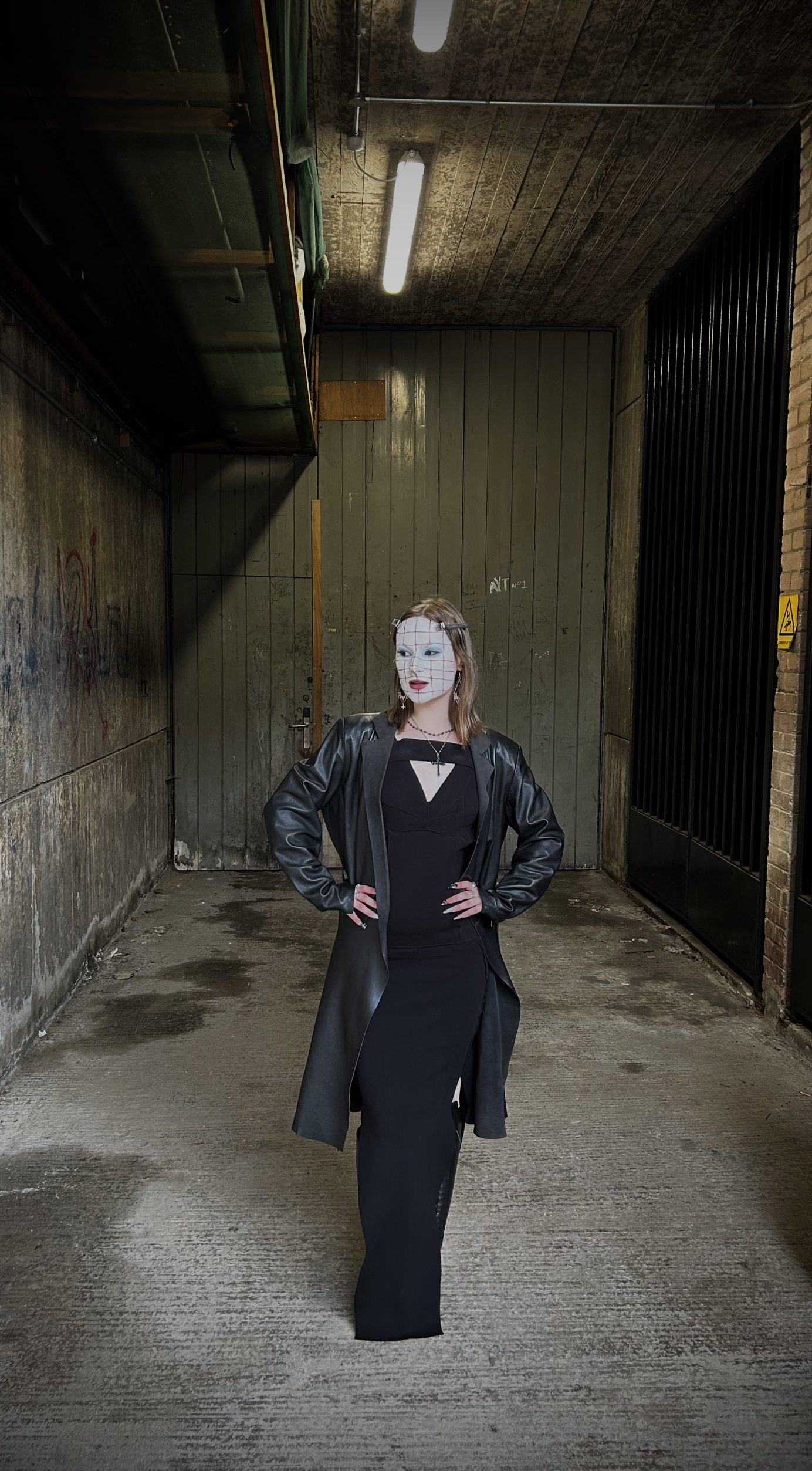
Amelia Reardon

Affiliation: Concordia University

Research Areas:
Period: Early Modern Gothic, 18th Century Gothic, 19th Century Gothic, 20th Century Gothic, 21st Century Gothic
Interdisciplinary Approaches: Eco-Gothic, Folklore and Myth
Genres and Media: Fiction, Film and TV
Regions and Cultures: American Gothic, English Gothic, Irish Gothic, Southern American Gothic

Amelia Reardon (she/they) is a first year PhD student at Concordia University in Montréal. Their research focuses on the Gothic genre and the ways it serves as an interlocutor between literary analysis, cognitive literary theory, and deconstructionist theories of self and narrative. She is also interested in the overlapping application of quantum theory on both narratology (specifically in the Gothic) and cognitive understandings of consciousness.

Email: amelia.reardon@mail.concordia.ca

Celeste Auman

Research Areas:
Period: 20th Century Gothic, 21st Century Gothic
Gender: Female Gothic, Gothic Masculinity, Queer Gothic, Trans Gothic, Gothic Gender
Interdisciplinary Approaches: Eco-Gothic, Folklore and Myth, Spirituality and Religion
Genres and Media: Fiction, Film and TV, Poetry
Regions and Cultures: Postcolonial Gothic, African Gothic, American Gothic, Latin American Gothic, Middle-Eastern Gothic
Creatures: Animals, Ghosts, Monsters, Vampires

Celeste Auman is a prospective graduate student with a special interest in the gothic, specifically modern and American gothic.

Meltem Vardal Ozkutlu

Research Areas:
Period: Early Modern Gothic, 18th Century Gothic, 19th Century Gothic, 20th Century Gothic, 21st Century Gothic
Gender: Female Gothic, Gothic Masculinity, Queer Gothic, Gothic Gender
Interdisciplinary Approaches: Eco-Gothic, Folklore and Myth, Technology, Medicine and Science
Genres and Media: Fiction, Film and TV, Theatre and Performance, Virtual Gothic
Regions and Cultures: English Gothic
Creatures: Aliens, Animals, Ghosts, Monsters, Vampires, Zombies

Meltem Vardal Ozkutlu holds a PhD in English Literature, researching women’s Gothic fiction, spatiality, female subjectivity, and nineteenth- and twentieth-century literary representations of gender, identity, power.

Email: meltemvardal@hotmail.com
Website: https://avesis.ankara.edu.tr/mvardal

Henriikka Koivisto

Affiliation: University of North Carolina at Greensboro

Research Areas:
Period: 18th Century Gothic, 19th Century Gothic, 20th Century Gothic, 21st Century Gothic
Gender: Female Gothic, Gothic Masculinity, Queer Gothic, Gothic Gender
Interdisciplinary Approaches: Eco-Gothic, Folklore and Myth, Technology, Medicine and Science
Genres and Media: Arts, Fiction, Film and TV
Regions and Cultures: American Gothic, Black Gothic, English Gothic, Irish Gothic, Nordic Gothic
Creatures: Monsters, Vampires

Henriikka Koivisto is a PhD candidate and instructor at the University of North Carolina at Greensboro.

Email: hhkoivisto@uncg.edu

Maria-Alexandra-Olivia David

Affiliation: West University of Timișoara

Research Areas:
Period: 19th Century Gothic, 20th Century Gothic, 21st Century Gothic
Interdisciplinary Approaches: Folklore and Myth, Technology, Medicine and Science, Gothic Music, Spirituality and Religion
Genres and Media: Animation, Arts, Fiction, Film and TV, Comics and Graphic Novels, Tourism and Travel
Regions and Cultures: American Gothic, English Gothic, European Gothic, Irish Gothic
Creatures: Ghosts, Monsters, Vampires

Maria David is a Ph.D. student at the West University of Timișoara, Romania. Her research focuses on the representation of Count Dracula as a sympathetic figure in popular fiction, cinema, and television.

Email: maria.david01@e-uvt.ro

Shu-Han Yang

Affiliation: National Taiwan University

Research Areas:
Period: 19th Century Gothic, 21st Century Gothic
Interdisciplinary Approaches: Technology, Medicine and Science
Genres and Media: Animation, Fiction, Film and TV
Regions and Cultures: American Gothic, Asian Gothic, English Gothic
Creatures: Ghosts

Shu-Han Yang’s research traces the uncanny across Victorian fiction and contemporary film, delineating cultural haunting through ethics of mourning and aesthetics of memory.

Email: elsieshyang@gmail.com
Website: https://orcid.org/0009-0005-2310-6654

My First Encounter With the Gothic

My First Encounter With the Gothic, by Mimi Manyin

My first encounter with the Gothic was an immersive experience. I came face-to-face with fear and fascination for the first time in a dream! I was seven at the time. One night, I lay awake thinking about the death of a character in a storybook. I wanted to know where the dead go. As I drifted in and out of sleep, a dream began to form.

I’m standing alone at the entrance of a cave. The cave looks dark and mysterious, beckoning me to enter. I climb in. I’m immediately surrounded by eerie colors – they’re coming from strange plants and creatures sprawled across the cave walls, exuding a supernatural glow. I hear hisses, growls, and whispers. Unnatural shadows and voices dance around me. Something stirs in the darkness. It’s restless and angry, and it’s coming toward me. I realize it’s a ghost! I run for my life…

I woke up scared and excited at the same time. For days afterwards, I couldn’t stop thinking about the dream. I sought answers from my parents, but they dismissed my encounter as a silly dream. Their disinterest triggered something explosive inside me. I sat down and turned my dream into a short story – the very first story I had ever written.

It wasn’t until many years later that I recognized my story’s Gothic trajectory: it has a complete arc with a dark beginning, middle, and end! There is a troubled protagonist, a disturbing inciting incident, a supernatural antagonist, a terrifying “rock bottom” moment (where the protagonist realizes he is going to die if he doesn’t fight back), and an epic battle between Good and Evil. Darkness, fear, rage, and despair infiltrate every line, along with blood and gore (definitely not PG-rated). In the end, my protagonist makes it out of the cave alive, but he is no longer the same person. I began to wonder if he emerges alone after all.

I realized I might have brought back a ghost with me that night.

My ghost stayed invisible until one day, it manifested during a very difficult time in my life when I had hit rock bottom. My ghost grew bigger and angrier. It finally leaped from the pages of my short story onto my graduate school application essay and dragged me straight to its writing program. My ghost whispered stories of deaths and rebirths into my ears. It told me to fight back with my blood and tears so I can rewrite my destiny. It commanded me to help others make sense of loss, grief, and pain through writing and teaching the Gothic. And this time, I faced the ghost instead of running away. I stared into its eyes, and I found myself.

I’ve been writing and advocating Gothic stories ever since. My first encounter with the Gothic was not only immersive but also transformative! I’m proud to say I’m no longer afraid of my ghost because now I know it has always been there to empower me!

Anne Kennedy

Affiliation: American Public University

Research Areas:
Period: Early Modern Gothic, 18th Century Gothic, 19th Century Gothic, 20th Century Gothic, 21st Century Gothic
Gender: Female Gothic, Gothic Masculinity, Queer Gothic, Trans Gothic, Gothic Gender
Interdisciplinary Approaches: Eco-Gothic, Folklore and Myth, Technology, Medicine and Science, Gothic Music, Gothic Fashion, Spirituality and Religion
Genres and Media: Fiction, Film and TV, Poetry

Anne Kennedy has a PhD in Cultural Studies from Bowling Green State University and teaches film and literature, including Gothic literature.

Email: anne.amk2us@gmail.com

Gary Emmins

Affiliation: Bucks New University

Research Areas:
Interdisciplinary Approaches: Folklore and Myth, Gothic Music
Genres and Media: Arts, Film and TV, Theatre and Performance
Regions and Cultures: English Gothic, Irish Gothic

Gary Emmins is a senior lecturer at Bucks New University with research interests including music video, experimental film, folk horror, and goth subculture.

Email: gary.emmins@bnu.ac.uk

Ilse Bussing Lopez

Affiliation: University of Costa Rica

Research Areas:
Period: 19th Century Gothic
Gender: Gothic Gender
Interdisciplinary Approaches: Eco-Gothic, Technology, Medicine and Science, Gothic Fashion, Spirituality and Religion
Genres and Media: Fiction, Film and TV, Poetry
Regions and Cultures: Postcolonial Gothic, American Gothic, Caribbean Gothic, English Gothic, European Gothic, Latin American Gothic, Southern American Gothic, Tropical Gothic
Creatures: Animals, Ghosts, Monsters, Vampires

I am a proud mom of two humans and three doggies, one of which resembles a bat. I have been drawn to the dark since early childhood, when I used to read Stephen King novels and worry my parents… a lot. As a Gothic academic I am obsessed with the nineteenth century, with aesthetics, spatial analysis. My latest research has to do with Pagan/ritualistic Gothic in Midnight Mass, Hereditary and Midsommar, as well as with Botanical Gothic. I am co-chairing the III Congreso Internacional en Literatura y Estudios Góticos, to be held this December at the University of Costa Rica.

Email: ilsebussing@gmail.com