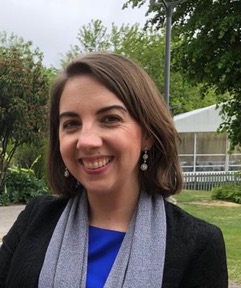
Aleister Knight

Affiliation: University of Washington, University of Hertfordshire

Research Areas:
Period: Early Modern Gothic, 18th Century Gothic, 19th Century Gothic, 20th Century Gothic, 21st Century Gothic
Gender: Gothic Masculinity, Queer Gothic, Trans Gothic, Gothic Gender
Interdisciplinary Approaches: Eco-Gothic, Folklore and Myth, Gothic Music, Gothic Fashion, Spirituality and Religion
Genres and Media: Animation, Arts, Fiction, Film and TV, Children and YA, Games, Comics and Graphic Novels, Poetry, Theatre and Performance, Tourism and Travel, Virtual Gothic
Regions and Cultures: Postcolonial Gothic, American Gothic, English Gothic, European Gothic, Irish Gothic, Scottish Gothic, Southern American Gothic
Creatures: Ghosts, Monsters, Vampires

I am an international student studying an MA in folklore. I have interest in exploring the relationship between the Gothic, gender, and sexuality. After completing my MA, I plan to continue to pursue a PhD in Gothic studies with specialization in monsters, queerness, and masculinity studies.

Email: aleisterknight22@gmail.com

Sorcha Ni Fhlainn

Affiliation: Manchester Metropolitan University

Research Areas:
Period: 20th Century Gothic, 21st Century Gothic
Gender: Female Gothic
Genres and Media: Fiction, Film and TV
Regions and Cultures: American Gothic, English Gothic, Irish Gothic, Southern American Gothic
Creatures: Aliens, Ghosts, Monsters, Vampires

I am a Reader in Film Studies and American Studies at Manchester Metropolitan University. Working on Vampires, Popular Culture & Horror.

Email: Sorcha.Ni.Fhlainn@gmail.com

Kestrell Verlager

Research Areas:
Period: 20th Century Gothic, 21st Century Gothic
Gender: Female Gothic, Queer Gothic
Interdisciplinary Approaches: Folklore and Myth, Technology, Medicine and Science
Genres and Media: Fiction, Film and TV
Regions and Cultures: American Gothic
Creatures: Monsters

Blind bookworm and horror movie fan (especially anything featuring witches), with a background in disability and media studies. Pet project: training Alexa as my virtual familiar.

Email: kestrell@panix.com
Website: https://kestrell7.github.io

Anthony Mandal

Affiliation: Cardiff University

Research Areas:
Period: 18th Century Gothic, 19th Century Gothic, 20th Century Gothic, 21st Century Gothic
Gender: Female Gothic, Gothic Gender
Interdisciplinary Approaches: Folklore and Myth, Technology, Medicine and Science
Genres and Media: Fiction, Film and TV, Games, Comics and Graphic Novels, Virtual Gothic
Regions and Cultures: Postcolonial Gothic, English Gothic, European Gothic, Irish Gothic, Scottish Gothic, Welsh Gothic
Creatures: Ghosts, Vampires

Anthony Mandal writes about Gothic literature and print culture, as well as modern Gothic and the digital.

Email: mandal@cardiff.ac.uk
Website: https://profiles.cardiff.ac.uk/staff/mandal

Richie Snowden-Leak

Affiliation: University of Liverpool

Research Areas:
Period: 19th Century Gothic, 20th Century Gothic, 21st Century Gothic
Gender: Female Gothic, Gothic Masculinity, Queer Gothic
Interdisciplinary Approaches: Eco-Gothic, Folklore and Myth, Technology, Medicine and Science, Spirituality and Religion
Genres and Media: Animation, Arts, Fiction, Film and TV, Comics and Graphic Novels, Poetry, Theatre and Performance, Virtual Gothic
Regions and Cultures: Arctic Gothic, English Gothic, Irish Gothic
Creatures: Aliens, Animals, Ghosts, Monsters

Richie Snowden-Leak is an AHRC-funded PhD candidate, researching the Weird and ‘confrontational escapism’ at the University of Liverpool.

Email: rsnowdenleak@gmail.com

Madison Harris

Research Areas:
Period: Early Modern Gothic, 18th Century Gothic, 19th Century Gothic
Gender: Female Gothic, Queer Gothic
Interdisciplinary Approaches: Technology, Medicine and Science
Genres and Media: Fiction, Poetry
Regions and Cultures: English Gothic, Irish Gothic
Creatures: Ghosts, Monsters, Vampires

Madison Harris’ research interests include British and Irish literature, psychoanalysis, and feminist theory.

Email: madisonmicheleharris@gmail.com

My First Encounter With the Gothic

My First Encounter With the Gothic, by Christian Wilken

Suddenly the day was gone, 
night came out from under each tree and spread.

I can’t claim with certainty what my very first encounter with the Gothic was. Perhaps it was the night in 1994 when my older sister rented The Nightmare Before Christmas on VHS. She was so unsettled that she banned the film from her household for decades — while for me, it opened a door into a dark enchantment that I’ve been chasing ever since. And as 90s kids, we were also given Greg Weisman’s wonderful Gargoyles (1994–1997), the one Disney Afternoon show that truly lodged itself under my skin, where it remains to this day.

But on November 1, 1997, something more formative happened. A ten-year-old boy from the northern German boondocks found himself glued once again to daytime TV. There it was: a cartoon film about Halloween, about time travel to Ancient Egypt, the origins of Samhain and the gargoyles of Notre Dame, culminating in a contemporary Mexican cemetery on El Día de los Muertos. It bore the rather awkward German title Kopfüber in die Geisterstunde (Headfirst into the Witching Hour), a title that only made it harder for me to rediscover the film over the next eighteen years.

I now know that it was a modest Hanna-Barbera production animated largely in Asia. More crucially, it was the brainchild of another lifelong addict of ghost stories: Ray Bradbury of Waukegan, Illinois, better known to some as Green Town. When Bradbury published The Halloween Tree in 1972, it was always with the intention of adapting it into a film for audiences who felt the pull of All Hallows’ Eve. When that dream faltered, he released it as a novel loosely linked to his Green Town trilogy, those semi-autobiographical stories of boyhood in Illinois: bottling Dandelion Wine, braving the uncanny ravine (a liminal zone that also appears in the cartoon), and celebrating the 4th of July with his grandfather, who eventually gave him the bittersweet wisdom of last goodbyes and life’s brevity.

In both novel and film, a group of boys chase the spirit of their friend Pip across time and cultures, guided by the spectral Mr. Moundshroud. Their journey is a meditation on death, tradition, and the eerie beauty of Halloween as a shared inheritance. For the Gothic imagination, it offers everything: crypts and cemeteries, liminal thresholds, uncanny mentors, and the reminder that mortality is the shadow behind every festival light.

Having since taught and examined The Halloween Tree, I now situate its dark existentialism between Kierkegaardian anxiety and Jungian archetype. Yet my fascination is unchanged from that first November afternoon twenty-eight years ago. Bradbury’s story endures for its nocturnal aesthetic, yes, but even more for its courage. When Pip’s friends each give up a year of their lives without hesitation, they acknowledge what awaits us all: horrors, partings, the “undiscovered country”. But they also affirm that this journey can be faced in solidarity: in kinship, in mutual recognition, and in light against the encroaching dark. What first looked like just another cartoon has become, through Bradbury’s words, a lifelong encounter: a reminder that the Gothic is not only about ghosts, but about the beauty of how we speak of them.

Daniel Linkiewicz

Research Areas:
Period: 18th Century Gothic
Gender: Female Gothic, Gothic Masculinity, Queer Gothic, Trans Gothic, Gothic Gender
Interdisciplinary Approaches: Folklore and Myth, Gothic Music, Gothic Fashion
Genres and Media: Fiction, Film and TV, Games, Comics and Graphic Novels, Poetry, Theatre and Performance, Tourism and Travel, Virtual Gothic
Regions and Cultures: English Gothic, European Gothic, Welsh Gothic
Creatures: Aliens, Animals, Ghosts, Monsters, Vampires, Zombies

Daniel Linkiewicz is a BA English philology student writing a thesis on the Gothic.

Email: pldanielpl1235@gmail.com

Katharina Hendrickx

Affiliation: University of Sussex

Research Areas:
Period: 19th Century Gothic, 20th Century Gothic, 21st Century Gothic
Gender: Female Gothic, Gothic Gender
Genres and Media: Fiction, Film and TV, Games
Regions and Cultures: American Gothic, English Gothic, European Gothic

Katharina Hendrickx is a Research Associate in media and film at the University of Sussex. Her research examines the crime subgenre of domestic noir, its literary heritage, popularity and readership.

Email: katluisehendrickx@gmail.com

Jamie Gorrod

Affiliation: University of Bristol

Research Areas:
Period: 19th Century Gothic, 20th Century Gothic, 21st Century Gothic
Gender: Queer Gothic, Trans Gothic, Gothic Gender
Interdisciplinary Approaches: Eco-Gothic, Gothic Music
Genres and Media: Fiction, Film and TV
Regions and Cultures: Postcolonial Gothic, American Gothic, Arctic Gothic, English Gothic, European Gothic, Irish Gothic, Nordic Gothic, Scottish Gothic, Tropical Gothic
Creatures: Animals, Ghosts, Monsters, Vampires

Jamie Gorrod is an MA English Literature student interested in coastal and nautical Gothic, and vampires.

Email: jamiegorrod@gmail.com
Website: https://jamiegorrod.carrd.co/